-
WHY REFORGED SWORD?
The Broken Sword: We all are broken and at the same time whole. Realizing the brokenness, the wound, the crack, is the opening towards Wholeness, Oneness (Dao, Advaita). The Reforged Sword: The Sword = Martial Art, (Nei Jia) Tai-Ji Quan A practice of mind and body and awareness, palpable and direct. Internal Martial Art points from the very beginning beyond itself, beyond practice, beyond effort. But usually it needs effort, to chip away every bit of effort! That is the forging. For the person, who acts in the world (Jiva), this means a reforging. Because the
-
SCHWERT UND FRIEDEN, Kampfkunst als Weg zu Erwachen und Heilung
Warum wählte ein Unsterblicher eine Kampfkunst als Weg zum Erwachen, zur Heilung und Einheit mit dem Dào (道), mit Gott? Zhāng Sānfēng ( 張三豐) war der Schöpfer des Tai-Ji Quan. Er war ein verwirklichtes Wesen, ein vollkommen Erwachter. Oder, um die Bezeichnung der Hindu Tradition zu bemühen, ein Parama Hamsa (परमहंस). Jemand, der volle Unterscheidungs und Entscheidungsfähigkeit hat. Ein solches Wesen hat nicht eine Kunst des Kämpfens als Fahrzeug zum Erwachen, zur Heilung, zur Einheit mit dem Dào (道), mit Gott gewählt. Tai-Ji Quan (太極拳) Kampfkunst des höchsten Prinzips Das Martialische Prinzip dient als
-
DAS GLEICHNIS DES NEUGESCHMIEDETEN SCHWERTES
Das Schwert schneidet plötzlich. Vorher aber musste das Schwert geschärft, und geschmiedet werden, die Esse befeuert, die nötigen Zutaten, das Metall, das Brennmaterial bereitgestellt, und davor die Schmiede gebaut werden. Ohne Esse und Blasebalg, kein Feuer, das heiß genug ist, ohne jenes kein Schmieden, kein Schwert. Die Schmiede ist der Körper, die Esse ist das Dan Tien und das sich verdichtende Gewahrsein, der Blasebalg der Atem, die Zutaten sind das Gewahrsein, der Körper und Hingabe, das Schmieden ist die Praxis selbst, das Schwert ist der transformierte Mensch. In späteren Stadien
-
FIGHTING, PLAY AND SELF DEFENCE
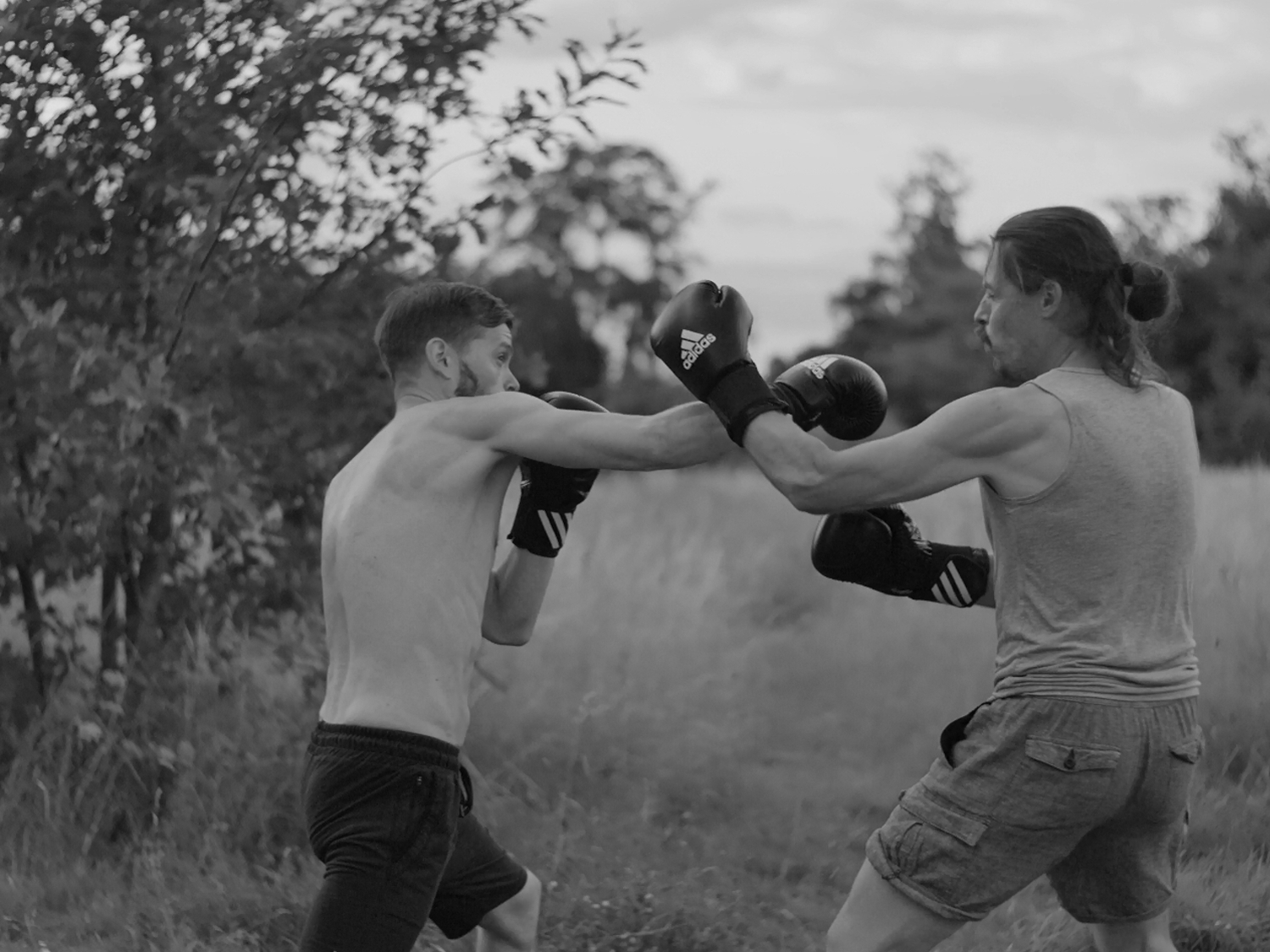
There are three types of fighting. Play, dominance, war. The first, the play category includes everything from cooperative to competitive partner training. Usually people do never get badly hurt in this category of playful fighting. The competitive aspect of hard sparring can switch into a dominance fight. If it is a fight for dominance, much more violent intention is involved. But the intention is still not, to kill the other one. An martial arts match can be in that category, or a street brawl. A fight for dominance is usually not
-
INTERNAL VS. EXTERNAL MARTIAL ARTS
External Styles also use internal principles. In Karate (a Martial Art, that counts as external style), the teachers used to tell us to “stick” to the bag, to the pad, or partner, when we punch. And to “think the technique through the partner”. I heard the same sentence from boxers. The teachers did not want us to change the outside, the visible form of the punch, the stance, rotation of hip and so on, when they said these sentences. They wanted the outcome of the technique to change, the quality
-
BROKEN SWORD
Teaching martial arts and internal work (nei gong), which includes and is similar to qi gong, yoga, 'meditation', I was forced to learn about the mechanics of trauma and healing of trauma, as the release, that happens within internal work, can allow traumatic material to emerge. I wrote this essay, because I think, that it is essential to be informed about the mechanics of trauma, if practicing or teaching any kind of internal work. The aim was, to at least superficially touch on all the points where internal work and